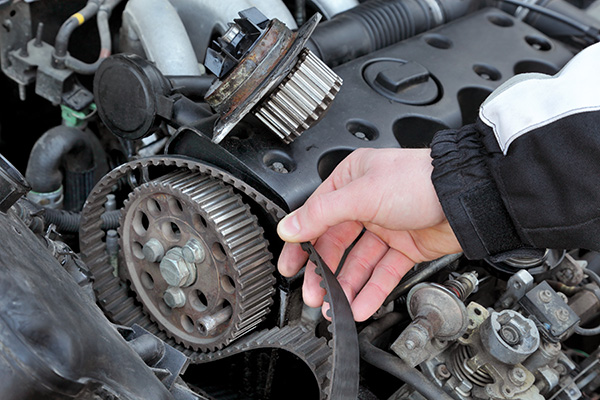
In the world of auto repair, there are certain parts that act like ticking clocks. You don’t see them, you don’t hear them, and you usually don’t think about them until they stop ticking. The timing belt is the champion of this category. It is a humble notched belt hidden behind a plastic cover, but it holds the life of your engine in its metaphorical hands.
If you have ever wondered why your mechanic gets a serious look on their face when they mention your timing belt, it is because this isn’t just another maintenance item like a spark plug or a cabin filter. If a timing belt snaps, the party is over for your engine.
The Mechanical Choreographer
To understand why replacement intervals matter, you have to know what this belt actually does. The pistons move up and down while the valves open and close to let air in and exhaust out. In an interference engine, the valves and pistons occupy the same space at different times. If the belt breaks, the function stops, and the pistons will slam into the open valves. This results in bent valves, ruined cylinder heads, and a repair bill that often costs more than the car is worth.
From Belts to Chains and Back Again
The history of engine timing is a bit of a back-and-forth journey. In the early days of internal combustion, heavy metal chains were the standard. They were durable but incredibly noisy and required constant lubrication from the engine oil.
In the 1960s, manufacturers started moving toward rubber timing belts. They were lighter, cheaper to produce, and ran much quieter than chains. They didn't need oil, but they did have a shelf life. As rubber technology improved, these belts went from needing replacement every 30,000 miles to the modern standard of 60,000 to 100,000 miles.
Recently, we have seen a massive resurgence of timing chains. Modern chains are much lighter and quieter than their ancestors. Many manufacturers now claim these chains are lifetime parts that never need replacing. However, as we see every day in the shop, lifetime is a relative term. Chains can stretch over time, and the plastic guides that hold them in place can brittle and crack, meaning even chain-driven engines need a watchful eye.
Knowing Your Number: When to Replace
The most common question we get is: How do I know when it is time? Unlike your brakes, which squeal, or your suspension, which clunks, a timing belt usually gives no warning signs before it fails. It doesn't stretch or slip; it simply snaps.
Here are the general rules we follow at the shop:
- Check your owner’s manual first. Most manufacturers suggest replacement between 60,000 and 90,000 miles.
- If you bought a used car and don't have the service records, we generally recommend replacing it immediately for peace of mind.
- Consider the age of the vehicle. Rubber degrades over time regardless of mileage. If your car is ten years old but only has 40,000 miles, that belt is likely dry-rotted and risky.
- Look for oil leaks. If your front engine seals are leaking and soaking the belt in oil, the rubber will soften and fail prematurely.
The While You Are in There Rule
When we perform a timing belt replacement, we often suggest replacing the water pump, tensioners, and idler pulleys at the same time. This isn't us trying to pad the bill. On most engines, the timing belt actually drives the water pump.
Since we already have to take half the engine apart to get to the belt, the labor for the water pump is essentially free. If your water pump fails two months after we put a new belt on, you would have to pay the entire labor cost all over again. It is one of those rare moments where spending a little more now saves you a massive amount of money and headache down the road.
Don't Play the Guessing Game
We know that a timing belt service is an investment, but it is the ultimate form of preventative medicine. It is the difference between a planned afternoon at the shop and an unplanned breakdown on the side of the highway with a destroyed engine.
If you aren't sure whether your car has a timing belt or a chain, or if you can't remember the last time it was serviced, come talk to us. We can pull up your vehicle's specific maintenance schedule and even do a visual inspection of the belt's condition to see if there are any cracks or fraying. Let us help you keep your engine's choreography perfectly in sync.
Schedule Timing Belt Service at Rick's Automotive Service
If your vehicle is due for timing belt maintenance or you want peace of mind before problems start, bring it to Rick's Automotive Service in Lawndale, CA. Our team can inspect your engine components, confirm service intervals, and help you avoid costly damage down the road. Call us today or stop by to schedule your timing belt inspection.