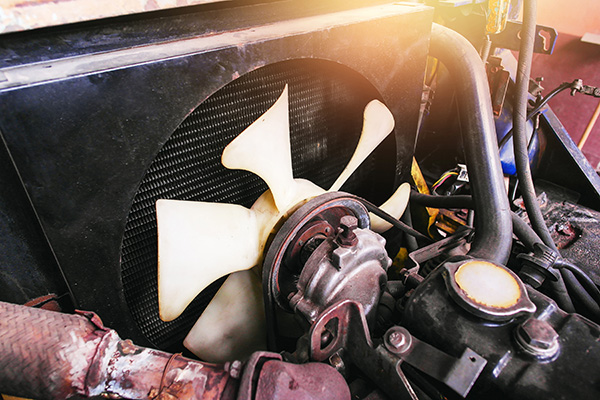
You shut the car off, grab your stuff, and then you hear it, the radiator fan is still running. Sometimes it’s for 20 seconds. Sometimes it’s for a few minutes. If you’ve never noticed it before, it can feel like something is wrong.
In most cases, it’s normal. In other cases, it’s a clue that the cooling system is working harder than it should, or that a sensor or control issue is telling the fan to stay on longer than necessary.
What The Radiator Fan Is Doing After Shutdown
The fan’s job is to pull air through the radiator and condenser to manage temperature. While you’re driving, airflow through the grille helps a lot. When you stop, airflow drops, but heat in the engine bay doesn’t magically disappear. In fact, temperatures can rise briefly after shutdown because the coolant stops circulating and heat soaks into nearby components.
Many modern cars are programmed to run the fan after you turn the engine off to control that heat soak. Some vehicles do it to protect plastic cooling parts. Others do it to protect turbocharger components. Some do it simply because the coolant temperature is still above the target range when you park.
Normal Reasons The Fan Keeps Running
A short fan run after parking can be completely expected, especially in these situations:
- You just drove on the highway and then parked immediately
- The weather is hot, or the vehicle was idling in traffic
- The air conditioning was running hard right before you shut it off
- You parked after a long climb or heavy load driving
Air conditioning is a big factor. The fan helps cool the condenser, and pressure in the AC system can stay elevated briefly after shutdown. It’s also common for the fan to run longer if you parked right after a drive instead of letting the car idle for a short moment.
If the fan runs briefly, then shuts off and doesn’t come back on, that’s usually just the car doing its heat management routine.
When A Fan Staying On Points To A Cooling System Issue
Where it becomes more concerning is when the fan runs much longer than normal, runs at high speed frequently, or starts doing it on mild days during ordinary driving. That can point to the engine running hotter than it should or the system not shedding heat efficiently.
Common causes include low coolant level, restricted airflow through the radiator, a thermostat that’s not controlling temperature correctly, or a cooling fan system that’s compensating for another weakness. We also see fans run more often when the radiator fins are packed with debris or bugs, or when the coolant condition is poor, and heat transfer is not as efficient as it used to be.
If your temperature gauge is creeping higher than its usual spot, or you’re getting a coolant warning, treat that as a priority. A fan running more is not the root problem, it’s the car trying to keep up.
Electrical Triggers That Keep The Fan Powered
Sometimes the cooling system is fine, and the issue is electrical or sensor related. The fan operation is controlled by the engine computer using temperature readings and pressure readings, and it can be triggered by more than just engine coolant temperature.
A few common triggers we look at:
- Coolant temperature sensor readings that don’t match reality
- A stuck relay or control module that keeps the fan circuit energized
- AC pressure sensor issues that tell the system pressure is too high
- Wiring or connector problems that create intermittent signals
A telltale sign is a fan that runs hard even when the engine is cold, or a fan that turns on randomly at startup. Another clue is a fan that keeps running long enough to drain the battery if the car sits.
Quick Checks That Help You Describe The Problem
You don’t need to troubleshoot it yourself, but a few observations can help us narrow it down faster.
First, note how long the fan runs after shutdown. Is it under a minute, or closer to ten minutes? Next, notice whether it’s the low fan speed sound or the loud high-speed roar. Also, pay attention to patterns: does it happen only after the AC is on, only after highway driving, or even after short trips?
If you’re comfortable doing so, glance at the temperature gauge while driving. You’re not looking for an exact number, just whether it’s staying where it normally does. And if you notice a coolant smell, steam, or a coolant level dropping over time, bring that up. We’ve seen plenty of cases where the fan behavior was the first obvious symptom of a small leak.
When To Drive Less And Schedule Service
If the fan runs for a short time after you park and the car otherwise behaves normally, you can usually keep driving and simply keep an eye on it. If the fan is running for long stretches, coming on at high speed often, or you notice temperature changes, warning lights, a coolant smell, or repeated low coolant levels, it’s time to schedule service soon.
If the fan is staying on long enough to risk a dead battery, move it up the list. That’s one of those annoyances that turns into an inconvenient morning fast, and it usually means the control side of the system needs attention.
When we check this in the shop, we look at coolant level and condition, verify temperature readings, confirm fan command behavior, and inspect for leaks or airflow problems. In our experience, the quickest fixes happen when we catch the pattern early, before overheating or battery drain becomes part of the story.
Get Cooling System Service in Lawndale, CA, with Rick's Automotive Service
If your radiator fan keeps running after you park, or it’s starting to run longer and louder than it used to, we can inspect the cooling system and pinpoint what’s triggering it. We’ll explain what we find, whether it’s normal heat soak behavior or a problem that needs attention, and recommend the right next step.
Get cooling system service in Lawndale, CA, with Rick's Automotive Service, and we’ll help you avoid overheating surprises and unnecessary battery drain.