A car that shakes during acceleration is doing more than making the drive uncomfortable. It is giving you a clue about when the problem appears. If the vibration happens mainly when you press the gas, that points in a different direction than a shake while braking, idling, or cruising at a steady speed.
Acceleration puts load through the engine, transmission, axles, mounts, tires, and suspension. A weak part that feels quiet at light speed can start showing itself when torque increases. The shake may be small at first, but it should not be ignored, especially if it is getting stronger or showing up more often.
The Timing Of The Shake Helps Narrow It Down
A vibration during acceleration can come from several systems, so the pattern is important. Does it happen from a stop? Does it show up around 40 mph? Does it only happen when climbing a hill or merging onto the freeway? Does the steering wheel shake, or do you feel it more through the seat and floor?
A steering wheel shake can point toward front tires, wheels, suspension, axles, or steering parts. A vibration felt through the floor or seat can involve rear tires, driveline parts, engine mounts, transmission mounts, or exhaust contact. A shake that appears only under load may point toward an engine misfire, CV axle, driveshaft, or mount problem.
Those details help guide the inspection. Without knowing when the shake happens, it is easy to chase the wrong area.
Engine Misfires Can Feel Like A Shake Under Load
One common cause of shaking during acceleration is an engine misfire. A misfire means one or more cylinders are not burning fuel correctly. The engine may idle acceptably, then shake when you press the gas because the rising cylinder pressure requires the ignition system to work harder.
Worn spark plugs, weak ignition coils, dirty fuel injectors, vacuum leaks, low fuel pressure, or sensor problems can all cause misfires. Sometimes the check engine light comes on. If it flashes, the problem is more urgent because unburned fuel can damage the catalytic converter.
A misfire shake may feel like bucking, stumbling, or rough power delivery instead of a steady vibration. Testing the ignition system, fuel system, air intake, and scan data helps confirm whether the engine is actually running rough or another part is creating the movement.
Worn Engine Or Transmission Mounts Can Let The Drivetrain Move
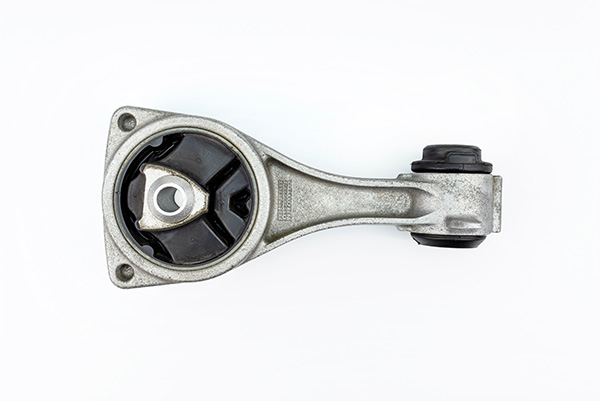
Engine and transmission mounts hold the drivetrain in place while absorbing normal vibration. During acceleration, the engine twists against those mounts. If a mount is cracked, collapsed, leaking, or separated, that movement can become excessive.
A bad mount may create a thump when shifting into drive or reverse. It may also cause a shake during takeoff, especially when the vehicle first starts moving. In some cases, the engine can move enough to pull on hoses, wiring, exhaust parts, or intake tubing.
Mount problems can feel like an engine issue from inside the cabin, even when the engine runs evenly. That is why mounts should be checked along with engine performance when the complaint is a shake under acceleration.
CV Axles Can Shake When Power Is Applied
Front-wheel-drive and many all-wheel-drive vehicles use CV axles to transfer power to the wheels while allowing steering and suspension movement. When an inner CV joint wears out, it can cause a vibration during acceleration.
This type of shake is often felt through the floor, steering wheel, or front of the vehicle. It may be worse under load and improve when you let off the gas. A torn CV boot, grease loss, worn joint, or damaged axle shaft can all be involved.
Outer CV joints are more commonly associated with clicking during turns, while inner joint wear is more likely to cause acceleration vibration. A careful check of axle boots, joint play, and road test behavior helps separate axle issues from tire or mount problems.
Tires And Wheels Can Still Be Involved
Tire and wheel problems are not limited to highway cruising. A bent wheel, separated tire belt, uneven tread wear, poor balance, or out-of-round tire can create shaking that becomes more noticeable as speed increases. If the vibration starts during acceleration but continues at steady speed, tires and wheels should be checked.
A tire issue may also change with road speed rather than engine RPM. That is an important clue. If the shake follows vehicle speed, rotating parts like tires, wheels, hubs, axles, and driveshafts become more suspicious. If it follows engine load or RPM, the engine, mounts, or transmission may be more likely.
Tire condition, wheel balance, alignment, and suspension wear all work together. A worn suspension part can also make a tire vibration feel worse.
Driveline And Transmission Problems Can Show Up Under Load
Rear-wheel-drive and all-wheel-drive vehicles may shake during acceleration due to driveshaft, U-joint, center support bearing, differential, or driveline angle issues. Worn U-joints can cause clunks, vibration, or a shudder that gets worse as torque increases.
Transmission problems can also feel like acceleration shake. A slipping clutch, torque converter shudder, worn internal parts, old fluid, or a mount problem may create vibration when the vehicle is trying to transfer power. Sometimes the engine feels fine, but the power delivery through the drivetrain is uneven.
Transmission fluid condition, mount condition, driveline play, and road test behavior all help identify where the vibration begins.
Why You Should Not Keep Driving Until It Gets Worse
A small acceleration shake can become a larger repair if the cause is ignored. A misfire can damage the catalytic converter. A worn axle can get worse and affect drivability. A bad mount can stress nearby parts. A tire with internal damage can become a safety concern.
Regular maintenance can prevent some of these problems, but a new vibration needs more than a quick look. The safest approach is to identify whether the shake comes from the engine, drivetrain, tires, suspension, or mounts before more parts are affected.
A vibration that appears during acceleration is not something to brush off because the vehicle still moves. The load of acceleration is exposing a weakness somewhere.
Get Acceleration Vibration Diagnostics In Lawndale, CA, With Rick's Automotive Service
If your vehicle shakes, shudders, bucks, or vibrates when you press the gas, Rick's Automotive Service in Lawndale, CA, can inspect the engine, mounts, axles, tires, wheels, transmission, and driveline parts.
For acceleration vibration diagnostics before the problem gets worse, contact us to schedule an appointment.