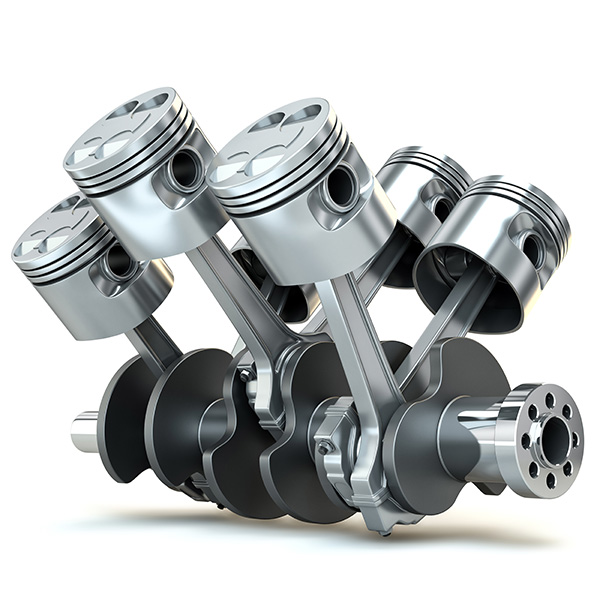
The crankshaft position sensor tells the engine computer how fast the crankshaft is turning and where it is in its rotation. That information helps the computer control ignition timing, fuel injection, variable valve timing, misfire monitoring, and other essential engine functions.
When the signal becomes inaccurate or disappears, the engine may stall, hesitate, misfire, take longer to start, or refuse to start at all. A failed sensor is one possible cause, but damaged wiring, a faulty reluctor wheel, incorrect mechanical timing, or excessive crankshaft movement can produce similar symptoms.
How the Crankshaft Position Sensor Works
Most engines use either a magnetic sensor or a Hall-effect sensor positioned close to a toothed reluctor wheel. The reluctor may be attached to the crankshaft, flywheel, flexplate, harmonic balancer, or another rotating component.
As the teeth pass the sensor, they create a changing electrical signal. A missing tooth or specially arranged gap provides a reference point that allows the engine computer to determine crankshaft position. The computer compares this signal with information from the camshaft position sensor to coordinate combustion accurately.
The gap between the sensor and reluctor must remain within specification. If the sensor is loose, installed incorrectly, or positioned too far from the wheel, the signal may become weak or irregular.
Heat and Internal Sensor Failure
Crankshaft sensors often operate near the engine block, transmission housing, or exhaust system. Repeated exposure to high temperatures can weaken internal electronics, insulation, windings, or soldered connections.
A heat-damaged sensor may work when the engine is cold and stop producing a dependable signal after the vehicle warms up. The engine may stall during a drive and restart only after sitting for several minutes. This pattern can become more frequent as the sensor continues deteriorating.
Heat-related failure should still be confirmed through testing. A fuel pump, ignition module, control unit, relay, or electrical connection can also stop working at higher temperatures and recover after cooling.
Oil, Coolant, and Road Contamination
Some crankshaft sensors seal directly against the engine with an O-ring. A hardened seal may allow engine oil to leak around the sensor and into its electrical connector. Oil contamination can weaken terminal contact, soften insulation, and interfere with the signal.
Coolant leaks, road salt, water, and dirt can also reach sensors mounted low in the engine compartment. Corroded terminals increase electrical resistance, while damaged connector seals allow contamination to return after cleaning.
Replacing the sensor without correcting the nearby leak may lead to another failure. The connector, wiring, seal, mounting surface, and surrounding components should be included in the inspection.
Wiring and Connector Problems
The crankshaft position signal travels through wiring that may be exposed to heat, vibration, sharp brackets, oil, and movement between the engine and body. A wire can break internally even when the insulation still looks acceptable from outside.
Loose terminals may create an intermittent connection as the engine moves during acceleration or braking. Wiring routed too close to ignition components can also pick up electrical interference and distort a low-voltage sensor signal.
Technicians may test:
- Sensor power supply and ground
- Signal voltage or waveform
- Connector terminal tension
- Circuit resistance and continuity
- Voltage drop under operating conditions
- Harness movement while the engine runs
- Signal quality during cranking
A replacement sensor will not correct an open circuit, shorted wire, poor ground, or damaged connector.
Reluctor Wheel and Mechanical Timing Problems
The sensor can be functioning correctly while the reluctor wheel produces the wrong signal. Teeth may become bent, cracked, contaminated, or damaged. A reluctor can also loosen or shift from its original position, causing the computer to receive incorrect crankshaft timing information.
On some engines, the reluctor is located inside the engine or attached to the flywheel or flexplate. Confirming its condition may require detailed waveform testing or significant disassembly.
A stretched timing chain, damaged timing component, slipped harmonic balancer, or excessive crankshaft end play can also alter the relationship between crankshaft and camshaft signals. These mechanical faults may trigger sensor-related trouble codes even though the sensor itself remains serviceable.
What Happens When the Signal Is Lost?
The engine computer needs a dependable crankshaft signal before it can control spark and fuel injection correctly. If the signal disappears while the engine is running, combustion may stop immediately, and the engine can stall.
Possible consequences include:
- Extended cranking before startup
- An engine that won’t start
- Sudden stalling
- Intermittent hesitation
- Misfiring or weak acceleration
- An illuminated check engine light
- Reduced-power operation
- Incorrect tachometer readings
- Failure of misfire monitoring
Sudden stalling can create a serious safety concern in traffic. Power-assisted steering and braking may become harder to use after the engine stops, even though mechanical steering and braking remain available.
Why Symptoms Can Be Misleading
A failing crankshaft sensor can resemble a weak fuel pump, ignition fault, camshaft sensor problem, low battery, starter concern, damaged timing component, or control-module failure. Stored codes such as crankshaft signal loss indicate what the computer detected, not automatically which part caused it.
Diagnostic testing may include monitoring engine speed during cranking, checking live data, measuring sensor output, and comparing crankshaft and camshaft waveforms. An intermittent fault may require testing while the engine is hot or while the wiring harness is moved carefully.
Regular maintenance does not include replacing the crankshaft sensor at a fixed mileage. Instead, attention should be given to oil leaks, damaged wiring, starting changes, warning lights, and unexplained stalling.
Get Crankshaft Position Sensor Service In Lawndale, CA, With Rick's Automotive Service
Rick's Automotive Service in Lawndale, CA, can test crankshaft and camshaft signals, wiring, connectors, reluctor operation, mechanical timing, and related starting or stalling concerns.
Contact us to schedule service if your vehicle stalls, cranks longer than normal, misfires, or will not start.